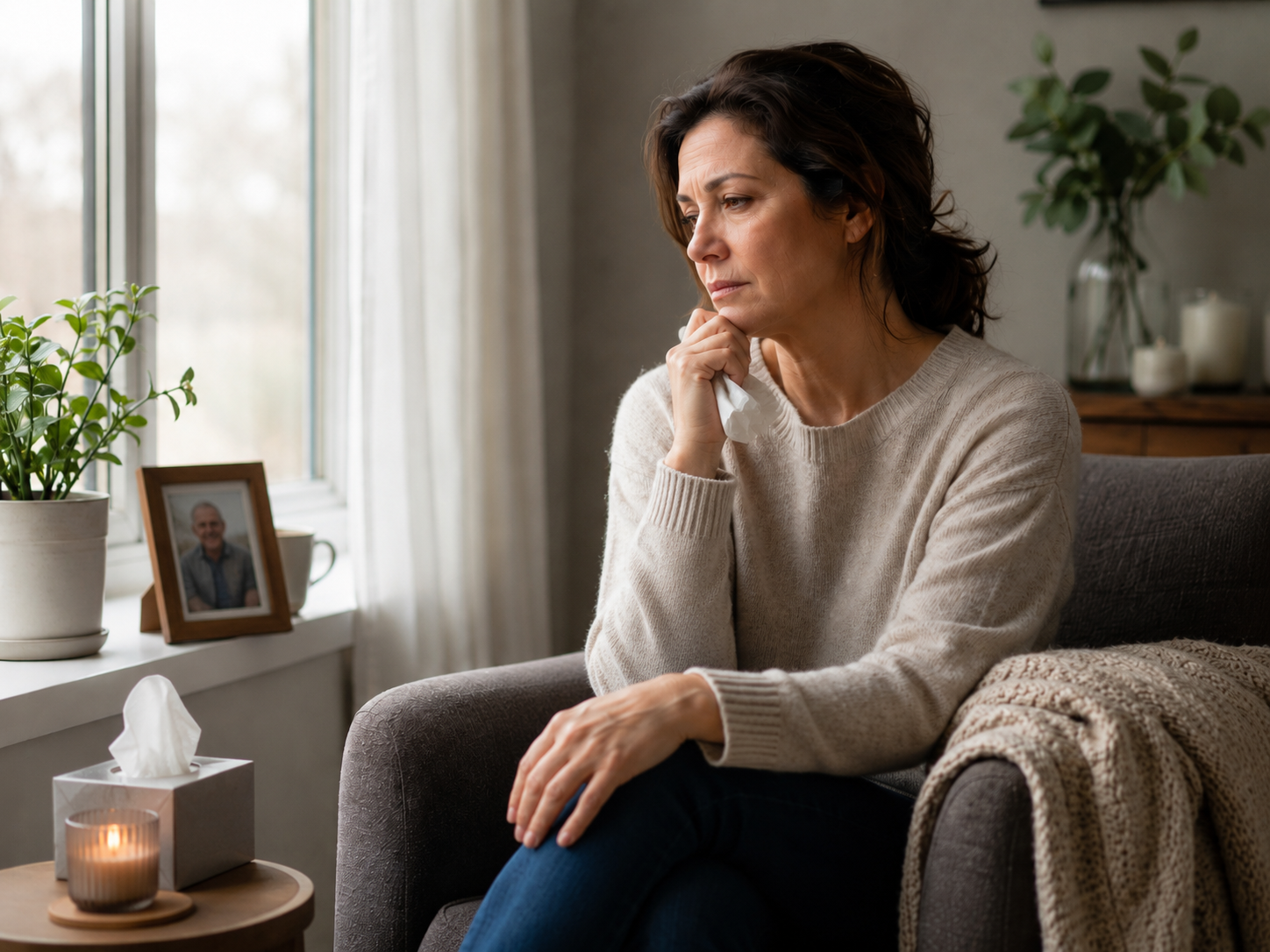
What Is Grief and Loss?
Grief is the natural response to losing someone or something meaningful. Most people think of grief after a death, but loss can take many forms. We may grieve the death of a loved one, the end of a relationship, changes in health, infertility, miscarriage, estrangement from family, job loss, a move, a major life transition, a loss of identity, or the life we thought we would have.
Grief can affect every part of a person. It may show up emotionally through sadness, anger, guilt, numbness, anxiety, relief, loneliness, or confusion. It can also affect the body through fatigue, changes in sleep or appetite, heaviness, restlessness, or difficulty concentrating. Grief does not always move in a straight line. Some days may feel manageable, while other days may feel overwhelming, even long after the loss has occurred.
Loss can also feel complicated when others do not fully recognize or understand the depth of what has been lost. Sometimes people feel pressure to “move on,” stay strong, or grieve in a certain way. In counselling, grief is not rushed or minimized. Instead, space is made to honour the loss, understand its impact, and gently begin to find ways to carry love, memory, pain, and hope together.
Counselling can offer support as you make sense of your grief, express what has been hard to say, adjust to life after loss, and find steadier ground in the middle of change. Healing does not mean forgetting. It means learning how to live with what has happened while being supported with compassion, care, and respect.